In pictures
Toyooka's table
Home / Food Culture
Soba, wagyu, and the Sea of Japan's catch
A lord's relocation brought soba noodles; Tajima cattle became the root stock of Kobe and Matsusaka beef; and Kinosaki's coastal waters supply the rest. Toyooka's table reflects its history and geography in equal measure.
Noodles a lord brought with him
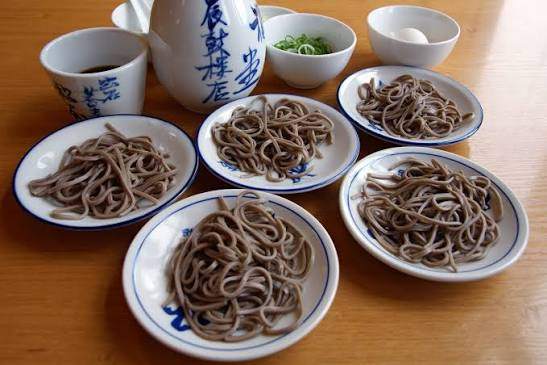
Izushi soba traces back to 1706, when Sengoku Masaakira, relocated from Ueda domain in Shinano, reportedly brought soba artisans with him, planting the tradition in Izushi. The now-iconic style — small plates of bite-sized noodles, typically five per serving — is actually a fairly recent development, believed to have taken shape in the 1950s–60s, after an earlier practice of serving soba on portable plates from street stalls.
A cooperative for Izushi plate soba was founded in 2008 to promote locally grown buckwheat, and the name "Izushi Sara-Soba" was trademarked in 2018.
The root of Japan's wagyu
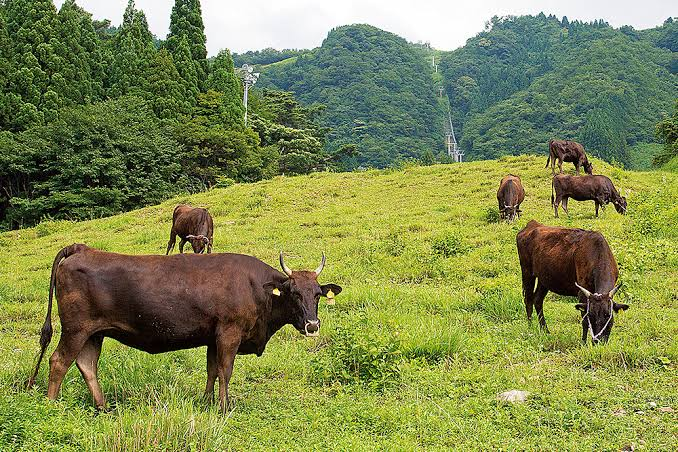
It's often said that the roots of Japan's branded wagyu lie in Tajima. The region's rugged, isolated mountains limited cattle exchange with other areas for centuries, preserving a distinct bloodline — Tajima cattle — in remarkable purity.
Today, much of the cattle behind famous brands like Kobe beef and Matsusaka beef traces back to Tajima bloodlines as foundation stock. Cattle raised around Toyooka are also sold directly as Tajima beef, prized for its fine marbling and refined flavor.
A spa town's table
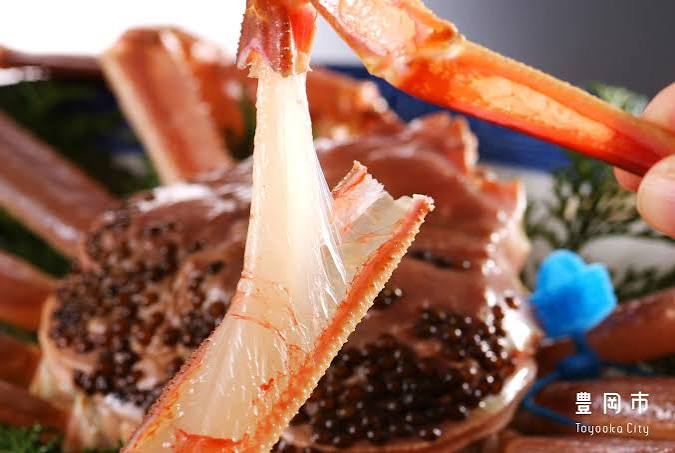
Kinosaki Onsen sits near the mouth of the Maruyama River as it meets the Sea of Japan, close to fishing ports like Toiyama, and enjoys correspondingly fresh seafood. Winter's snow crab (matsuba-gani) is Tajima's signature delicacy, drawing visitors to the ryokan of Kinosaki and Toyooka specifically for crab cuisine.
Kaiseki dinners at Kinosaki's inns — designed so guests won't catch a chill between visits to the outdoor baths — showcase local mountain and sea ingredients alongside Tajima beef sukiyaki, fresh seafood, Izushi soba and Tajima's local sake.
Timeline
Traditionally the origin of Izushi soba.
Soba is served on portable plates for convenience.
Roughly five small plates per serving becomes the norm.
Promotes local buckwheat sourcing.
Regional branding is formalized.
In pictures