In pictures
Toyooka's nature and scenery
Home / Sightseeing
From Genbudo Cave to the Kannabe Highlands
A nationally protected basalt cave, a scenic coastline on the Sea of Japan, a volcanic highland, and a park where you can meet the storks in person — Toyooka's natural side.
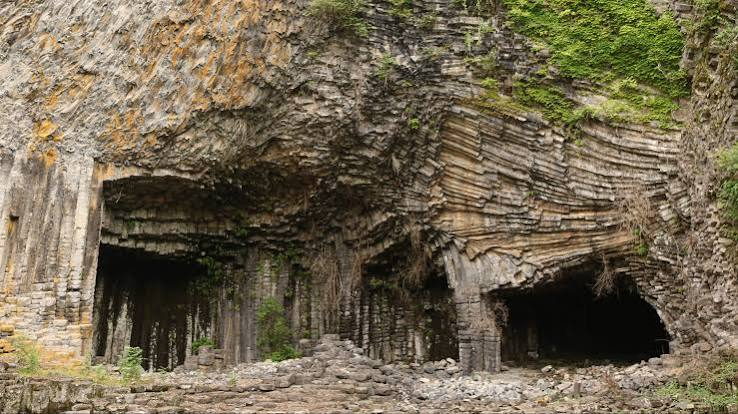
Columnar basalt
Along the Maruyama River, Genbudo is a group of caves and rock walls formed by lava that cooled roughly 1.6 million years ago, creating strikingly regular columnar joints. A nationally designated natural monument, it is also the site from which the rock type "basalt" (genbugan) takes its Japanese name — an important spot both scenically and geologically, now set within Genbudo Park with walking trails through the cave group.
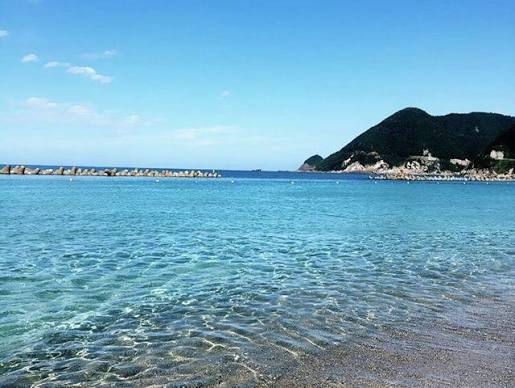
San'in Kaigan National Park
Takeno Coast is a stretch of rias coastline and white sand within San'in Kaigan National Park. Takeno Beach is known for its exceptionally clear water, while nearby cliffs and rock formations draw visitors year-round — for swimming in summer, and for the dramatic coastal scenery in every other season.
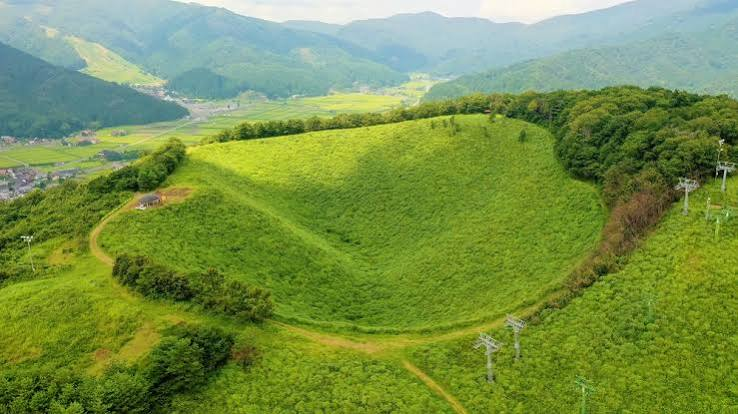
A highland shaped by volcanism
In the former Hidaka district, the Kannabe Highlands center on Mt. Kannabe, whose crater remains clearly visible. A ski resort in winter and a hub for camping and outdoor recreation from summer through autumn, the mountain itself erupted roughly 20,000 years ago, and its gentle profile and bowl-shaped crater are still legible in the landscape today.
Where to meet the storks
The base for the reintroduction effort described in "The Stork Story" is the Hyogo Park of the Oriental White Stork, which combines breeding facilities with public viewing cages. Visitors can learn about stork ecology and the history of Toyooka's reintroduction project, and with luck may spot wild birds flying overhead.
In pictures