In pictures
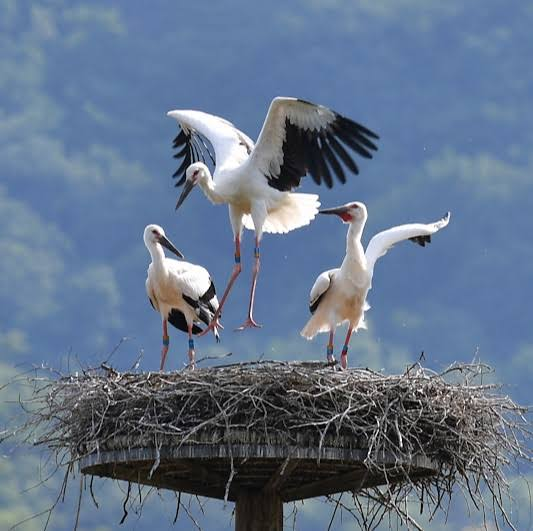
Life with the stork
Home / The Stork Story
From extinction to the wild
In 1971, Toyooka was where the last wild Oriental White Stork in Japan died. Half a century of captive breeding, release programs and farming reform later, storks fly over these skies again.
A memory of extinction
Oriental White Storks once ranged widely across Japan, including the Toyooka basin. Wartime clearing of pine forests, rapid postwar development, and heavy pesticide use — which depleted the small creatures storks feed on — drove their numbers down sharply. In 1971, the last wild stork in Japan's skies died here in Toyooka, effectively ending the species' wild presence in the country.
As the place where storks survived longest, Toyooka inevitably became the stage for their eventual recovery.
A long captive-breeding effort
Even before wild extinction, Toyooka had begun protecting and captive-breeding remaining birds in 1965 — though early breeding proved extremely difficult. The turning point came in 1985 with six storks received from the Soviet Union (now Russia), which broadened the genetic pool. In 1989, a long-awaited chick was born in captivity, and numbers began climbing steadily from there.
Back to the sky
Once the captive population passed 100 birds, Toyooka and its partners moved to full-scale reintroduction. In 2005, captive-bred storks were released from the Stork Park for the first time — the same year Toyooka City merged with five neighboring towns to become the city it is today.
Progress since has been steady: in 2007, a chick hatched and fledged in the wild for the first time in 43 years. Wild numbers passed 100 in 2017, 200 in 2020, and 300 in 2022.
The rice paddies changed
For storks to survive in the wild, rice paddies need abundant loach, frogs and insects. Local farmers adopted "stork-friendly farming," sharply reducing pesticides and fertilizers and flooding paddies through winter. Rice grown this way is sold as "Stork-friendly Rice," now cited nationally as a model for reconciling environmental protection with viable farming.
What began as bringing back a single species grew into a project reshaping Toyooka's entire approach to agriculture and the environment.
Timeline
Remaining wild birds are protected as breeding efforts start.
The last wild bird dies in Toyooka.
Genetic diversity opens the way to breeding success.
Numbers climb steadily from here.
Reintroduction begins the same year the merged city forms.
Released birds breed successfully in the wild.
Numbers keep climbing across these years.
In pictures